Best HYROX Shoes 2026 — Complete Buyer's Guide & Spec Comparison
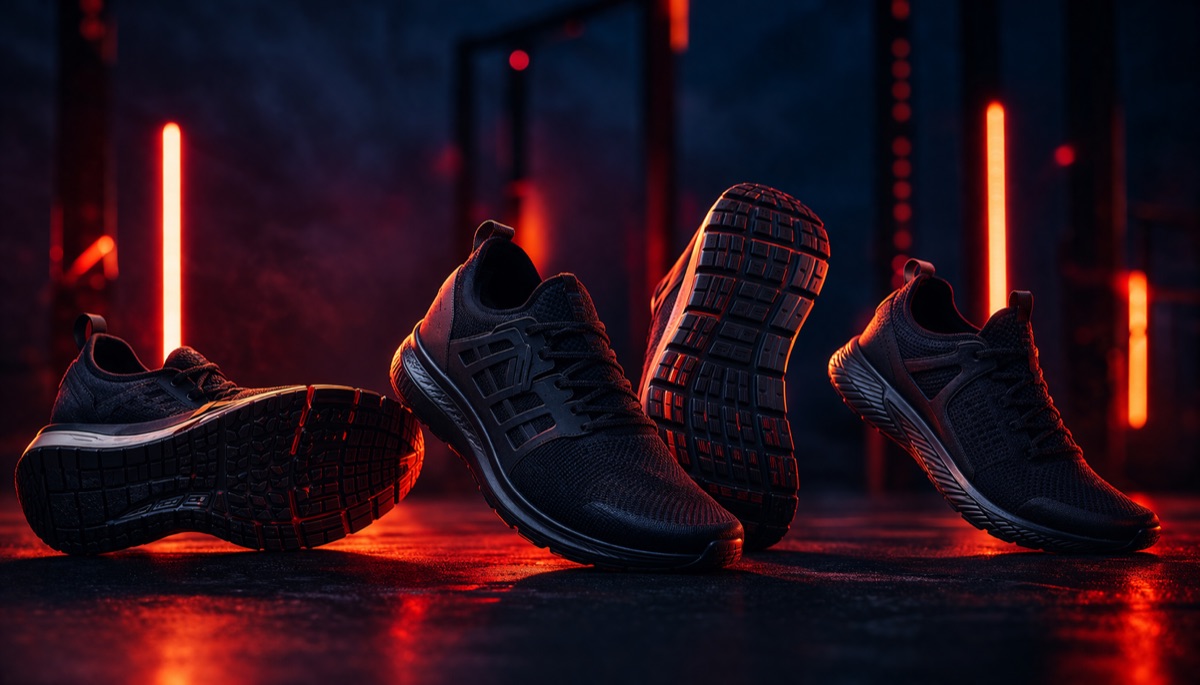
About this guide: This is a spec-and-community comparison of the most-discussed HYROX shoes for 2026. Specs are taken from each manufacturer’s public product pages and may change between revisions — verify the current spec before purchasing. This is not a paid review and does not include first-person testing.
HYROX uniquely punishes shoe choice. You run 8 km in eight 1 km segments, broken up by eight functional stations that demand horizontal stability (Wall Balls, Sandbag Lunges), explosive grip (Sled Push, Sled Pull), and forward propulsion (Burpee Broad Jump). A pure road shoe is too unstable; a pure CrossFit shoe is too harsh on the legs by km 6. The right HYROX shoe lives in between.
This guide compares the five most common shoes seen at HYROX events globally and helps you pick the right one for your weakness.
What Makes a Good HYROX Shoe
Before comparing models, understand what you are optimizing for. Hybrid trainers built for HYROX prioritize three things, in this order:
1. Cushion that survives 8 km
You will run a kilometer, then push a sled, then run again — eight times. Even a fresh pair of legs accumulates fatigue. Shoes with a thin or extremely firm midsole (e.g. weightlifting shoes, some pure CrossFit shoes) will feel punishing on the second half of the race.
2. Sticky, durable outsole for sled work
The Sled Push and Sled Pull stations are the single biggest separator between fast and slow finishes. If your outsole skates on the floor, your power leaks. Sticky rubber compounds (PUMAGRIP, Continental, Vibram) noticeably outperform softer running rubber here.
3. Lateral stability for Wall Balls, Lunges, and transitions
Wall Balls (100 reps) and Sandbag Lunges (100 m) are the stations where soft, narrow road shoes betray you. A shoe with a wider base and a less compressible heel keeps your ankle tracking properly when you are exhausted.
The Five Most-Worn HYROX Shoes in 2026
These five appear most often at HYROX start lines worldwide, based on event coverage and community discussion.
PUMA Deviate Nitro 3 HYROX
The official HYROX partner shoe. PUMA’s NITRO foam delivers genuine running comfort while the PUMAGRIP outsole is widely cited as the stickiest of any major HYROX shoe — independent wet-traction testing has scored PUMAGRIP at roughly 0.67, well above the cross-training average. (Source: RunRepeat traction tests.)
- Midsole: NITRO foam (PUMA’s nitrogen-infused EVA)
- Weight: ~280 g (US M9)
- Drop: ~8 mm
- Best for: Athletes whose weakness is the run, or who struggle on slick exhibition-hall floors
▶ Check PUMA Deviate Nitro 3 prices on Rakuten (Japan)
Nike Metcon 9 / 10
The CrossFit standard, repurposed for HYROX. The Metcon’s hallmark is the flat, dense heel and external heel clip, which gives unmatched stability under load. Where it suffers is the run — React foam offers some cushion but the firm geometry lets you feel the floor by km 6.
- Midsole: React foam + dense rubber outsole
- Weight: ~340 g (US M9)
- Drop: ~4 mm
- Best for: Strong-station, weak-run athletes who want maximum lift and lunge stability
▶ Check Nike Metcon prices on Rakuten (Japan)
Reebok Nano X4 / X5
The hybrid generalist. The Nano line has been rebuilding around HYROX’s demands; the X4 and X5 trade some lift-shoe rigidity for a softer running experience. Wide forefoot accommodates broader feet better than the Metcon.
- Midsole: Floatride Energy foam
- Weight: ~310 g (US M9)
- Drop: ~7 mm
- Best for: First-time HYROX athletes who want a single shoe that does everything competently
▶ Check Reebok Nano prices on Rakuten (Japan)
Adidas Dropset 3
Adidas’s HYROX-aimed cross-trainer. The Dropset chassis adds a second supportive layer on top of the EVA midsole, which translates to good multidirectional stability without the harshness of a Metcon.
- Midsole: Dropset chassis over EVA
- Weight: ~350 g (US M9)
- Drop: ~6 mm
- Best for: Lifting-strong athletes who want more comfort than a Metcon and a sticky Continental-style outsole
▶ Check Adidas Dropset prices on Rakuten (Japan)
New Balance Minimus TR V2
The minimalist option. Vibram outsole, very low stack, very light. Excellent ground feel for athletes who like to “feel” their lifts and transitions. The downside is obvious: limited cushion makes the second half of an 8 km run noticeably harsher.
- Midsole: REVlite + Vibram outsole
- Weight: ~240 g (US M9)
- Drop: ~4 mm
- Best for: Strong-running, ground-feel-loving minimalists who want the lightest possible shoe
▶ Check New Balance Minimus TR prices on Rakuten (Japan)
Spec Comparison Table
| Model | Weight | Drop | Stability | Cushion | Notes |
|---|---|---|---|---|---|
| PUMA Deviate Nitro 3 HYROX | ~280 g | 8 mm | ★★★ | ★★★★ | Official HYROX partner; PUMAGRIP outsole |
| Nike Metcon 9 / 10 | ~340 g | 4 mm | ★★★★★ | ★★ | Best stability, harshest run |
| Reebok Nano X4 / X5 | ~310 g | 7 mm | ★★★★ | ★★★ | Best generalist |
| Adidas Dropset 3 | ~350 g | 6 mm | ★★★★ | ★★★ | Multidirectional stability |
| NB Minimus TR V2 | ~240 g | 4 mm | ★★★ | ★★ | Lightest, most ground feel |
Weights are approximate (US M9 reference). Star ratings are spec-based relative trends, not subjective reviews. Always verify current pricing and spec on the manufacturer’s official site.
Which HYROX Shoe Should You Buy?
A simple decision tree based on your weakness in the 8 stations and your run history:
Your run is your weakness (you fade in the back half) → PUMA Deviate Nitro 3 HYROX or Reebok Nano
Your stations are your weakness (sled, lunges, wall balls slow you down) → Nike Metcon or Adidas Dropset 3
You want minimum weight and maximum ground feel → New Balance Minimus TR V2
You are a complete beginner and want one shoe that does everything → Reebok Nano X4/X5 or PUMA Deviate Nitro 3 HYROX
Practical Buying Advice
Size up half a size for races
Most HYROX athletes who race longer than 75 minutes report sizing up half a size to accommodate foot swelling. The benefit is most obvious during Sandbag Lunges, where forward toe pressure is significant.
Break them in for at least 3 weeks
Never debut a new shoe on race day. The midsole compression characteristics, lacing tension, and any minor hot spots only emerge over 50–80 km of running plus several station sessions. Use the HYROX training plan to schedule break-in time.
One shoe is fine — two is overkill for most
Some pros race in different shoes for different events (e.g. a stiffer shoe for Pro divisions, a softer shoe for Open). For 95% of athletes, a single well-chosen hybrid trainer is all you need.
Don’t optimize for what looks fast on Instagram
Carbon-plated road super-shoes do not work for HYROX — the stiff plate actively hurts on lateral movement at Wall Balls and Lunges. Trust the cross-trainer category.
HYROX Apparel: A Quick Word
Outside of shoes, HYROX gear is forgiving. Any moisture-wicking shirt and shorts will work. Some athletes wear thin gloves for Sled Pull rope grip, but they are not required. See our HYROX gear guide for a fuller list.
Bottom Line
There is no perfect HYROX shoe — only the right one for your weakness. Pick cushion if you fade on the runs, stability if your stations cost you time, and balance if you are new. Whichever you choose, break it in for several weeks before racing, and verify current sizing and spec on the manufacturer’s site before buying.
Related Articles
- What is HYROX? The Complete Guide
- The 8 HYROX Stations Explained
- HYROX Training Plan (8-week)
- HYROX for Beginners
- HYROX Pro vs Open Division Comparison
- HYROX Boston Guide
- HYROX NYC Guide
This site is not affiliated with HYROX, PUMA, or Upsolut Sports GmbH. All trademarks belong to their respective owners. This article may contain affiliate links. Specs are based on publicly available manufacturer data and may change between product revisions — verify current spec on the manufacturer’s site before purchasing.
📚Related Articles

HYROX 2026 Race Calendar: Every Confirmed City Worldwide
Complete HYROX 2026 race calendar by region — North America, Europe, Asia-Pacific, Latin America. Dates, cities, and the road to the PUMA HYROX World Championships in Stockholm.
HYROX Pro vs Open: Weights, Differences, and Which to Race
Complete comparison of HYROX Pro and Open divisions. Side-by-side weights for sled, sandbag, wall balls, and farmers carry, plus how to know when you're ready to make the jump to Pro.

HYROX for Beginners | 15 Essential Tips for Your First Race
New to HYROX? Here are 15 essential tips for your first race, from training and gear to pacing strategy and race day logistics. Everything a first-timer needs to know.

HYROX Dallas Guide | Venue, Registration, Training & Race Day Tips
Complete guide to HYROX Dallas. Learn about the typical venue, how to register, what to expect on race day, and how to train for HYROX in the Dallas-Fort Worth area.